

Professor Margaret Hu Serves as Expert Witness on AI in Law Enforcement Before the Illinois Advisory Committee to the U.S. Commission on Civil Rights
The July 21 hearing addressed the challenges and civil rights implications of AI systems in law enforcement decisionmaking
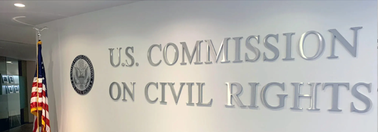
Margaret Hu, the Davison M. Douglas Professor of Law and director of the Digital Democracy Lab at William & Mary Law School, testified remotely before the Illinois Advisory Committee to the U.S. Commission on Civil Rights (“the Committee”) on July 21.
The Committee welcomed testimony as part of its ongoing study examining the use of artificial intelligence (AI) in law enforcement.
At the start of the hearing, Professor Hu began by discussing how AI tools are used by law enforcement agencies at the local, state, and federal level. Professor Hu explained that: “AI use by law enforcement includes round-the-clock surveillance operations, both in real life and on social media, biometric databases to track and identify suspects, ‘predictive policing’ where data is used to forecast where policies resources should be deployed, risk assessments of parolees, and efficiency tasks like generating police reports.” As law enforcement use of AI has proliferated, agencies now focus on collecting as much data as possible and analyzing that data to inform law enforcement decisionmaking.
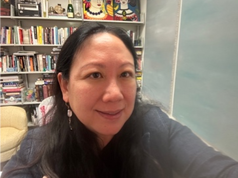
Hu shared that AI has many potential benefits for law enforcement users. “AI can help public defenders and prosecutors better handle caseloads, for example.” But Professor Hu cautioned that AI use in law enforcement carries risks, particularly when AI systems and data that they are trained on might be biased. Other potential harms can result through hallucinations and misinterpretation of AI-generated results.
When AI systems are trained on unrepresentative data or when algorithms incorporate human prejudices into how they weigh information, the AI systems may generate results that are skewed or false. Furthermore, AI systems often function as a black box, and users do not know what data a system was trained on, or what factors it views as most important when generating a response. Consequently, law enforcement users may be left unaware of biases in AI output, risking false arrests or misallocated resources. These errors undermine communities’ trust in law enforcement.
Finally, Professor Hu discussed how civil rights and constitutional frameworks can guide law enforcement use of AI and explored best practices to protect individuals in the future. Law enforcement’s use of biased AI systems risks infringing individuals’ constitutional rights through disparate treatment, and infringing upon due process rights, the right of people to be secure from unreasonable searches, and the right against self-incrimination. Additionally, Professor Hu explained that biased AI systems may also infringe statutory protections, including the Civil Rights Act of 1964. 
Hu concluded by pointing to promising practices for AI bias risk identification and mitigation. She encouraged the Committee to look to rights-based frameworks under the law, such as state and federal constitutions, and data privacy laws, such as the Biometric Data Privacy Act, passed by the Illinois legislature. She also shared the need to study and adopt AI ethical frameworks and standards established by the National Institute of Standards and Technology (NIST), the European Union, and other entities to mitigate AI risks and harms.
Professor Hu’s testimony fits into a project launched by the Committee to study the use of AI in law enforcement. Since February 2026, the Committee has invited conversations from different perspectives on the topic, particularly as it concerns constitutional rights, enforcement of relevant civil rights laws, and AI surveillance.
The July 21 panel was focused on hearing perspectives from researchers and academics. In addition to Professor Hu, the Committee also heard from Aziz Huq, Frank and Bernice J. Greenberg Professor of Law at the University of Chicago Law School, and Brandon L. Garrett, David W. Ichel Professor of Law at Duke Law School. Huq is a constitutional law scholar who has written extensively about the regulation of AI. Huq also previously led the Brennan Center’s Liberty and National Security Project. Garrett is a leading scholar of criminal justice outcomes, evidence, and constitutional rights and also serves as the Director of the Wilson Center for Science and Justice.
Following the briefing, the Committee will synthesize what it learns from the testimony to develop a final report with its overall findings to the Commission, as well as policy solutions and areas for improvement in the use of AI by law enforcement agencies.
To prepare for her testimony, Professor Hu received research support from Fred Dingledy, Senior Reference Librarian, William & Mary Law School, and members of her summer research team, including: William & Mary Law Students (Matt Heller, Talia Raffel, and Jack Reuter); William & Mary Undergraduate Students (Chloe Cohen and Noah Saechao); and Graduate Students (Lalantika Arvind (Georgetown) and Davi Liang, Research Director, Digital Democracy Lab (PhD Candidate, School of Computing, Data Sciences & Physics)).