

Shifting Sands and Sifting Through Databases
And the next! My latest assignment from Kimana is a case study on Mali, which will contribute to the larger Database of Post-Conflict Constitution Building Processes (PCCBP). The database is a continuously updated online database on constitution-building processes in fragile and conflict-affected settings. The database is fully searchable and features a comparative process to analyze data across eight stages of constitution building: Talks about Talks; Interim Constitution; Initial Drafting Stage; Final Drafting Stage; Public Participation; Review and Ratification; Entry into Force; Amendments. The database itself builds on an earlier dataset developed by Professor Jennifer Widner from Princeton University.
For my part in this project, I analyze Mali’s 1992 Constitution and the country’s broader constitutional history. To prepare the case study for the database, I need to answer nearly 200 structured questions designed to make the material searchable and contextually useful for practitioners and researchers.
I’m working in an Excel-based “codebook” template, where for each question, I not only provide an answer but also assign a corresponding code for database entry. Without Westlaw or LexisNexis, my comparative research relies on strategic Google searching, patience, and luck. This project will likely carry me through to the end of my time here, as it requires thoughtful commentary and formatted sources for each response. While the process is slow, it’s rewarding to see how much more systematic and efficient my comparative research approach has become, all with just a bit of practice.
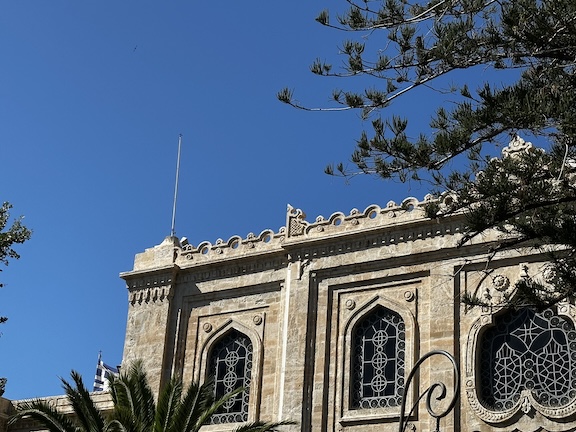
That said, I didn’t get much work done this past week since I only worked Monday and Tuesday. I took the rest of the week off to spend time with my sister, who visited for ten days. For four of those, we took a spontaneous trip to Crete, where surprisingly many recent grads from the Netherlands seem to vacation (probably why we managed to book last-minute, affordable flights). Our flight’s scheduled departure was way too early, but arriving just 30 minutes before departure didn’t pose any issues.
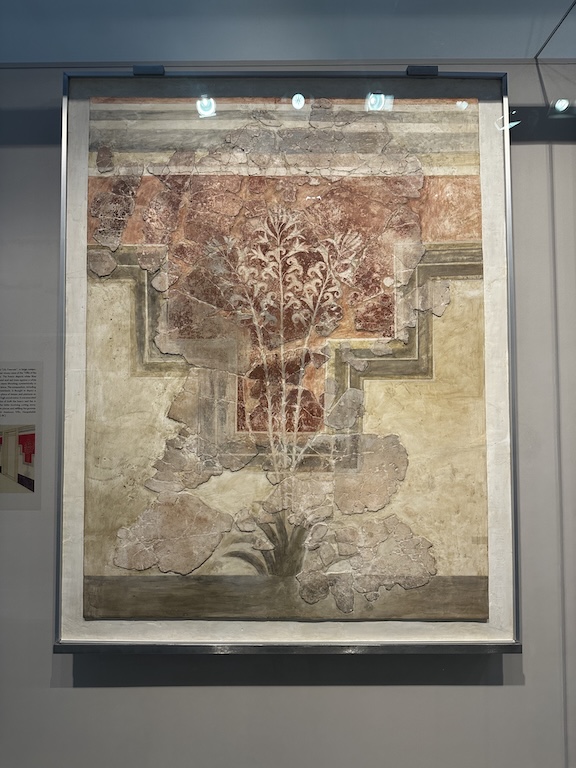
We spent our first night in Heraklion, visiting the Archaeological Museum (highly recommend) and seeing the new Jurassic World that evening (highly don’t recommend). The next morning, we joined a snorkeling tour, though rough waters meant the itinerary had to be reworked. Instead of meeting the guide, we were picked up from our budget hotel (which, impressively, offered an excellent breakfast) and taken to a resort-like beach. Choppy waters limited the marine life we could see, but we caught glimpses of ancient ruins submerged offshore, which was fascinating.
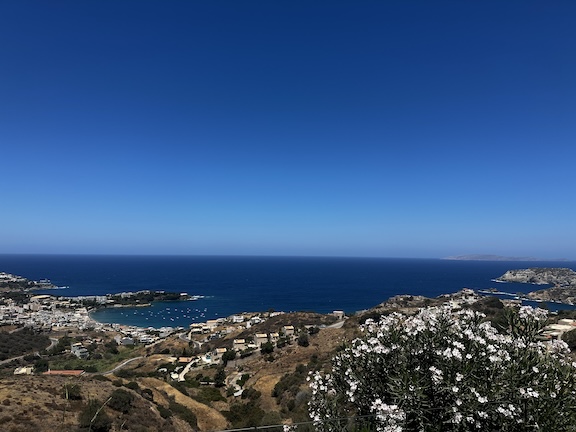 Next, we headed to Chania for two nights. We had planned to take the bus—a repurposed charter bus—but when it never showed up, we hitched a ride with a local and a happy Australian couple. Our hotel in Chania was eclectic and owned by two women well into their nineties. The hotel offered a tucked-away garden that had accumulated decades of character with overturned pots, plants running beyond their boundaries, and everything charmingly chaotic. The night clerk welcomed us with tea in the garden, which was the perfect ending to our eventful day.
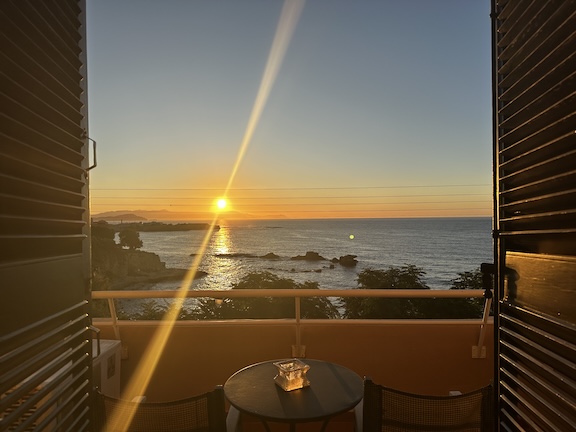
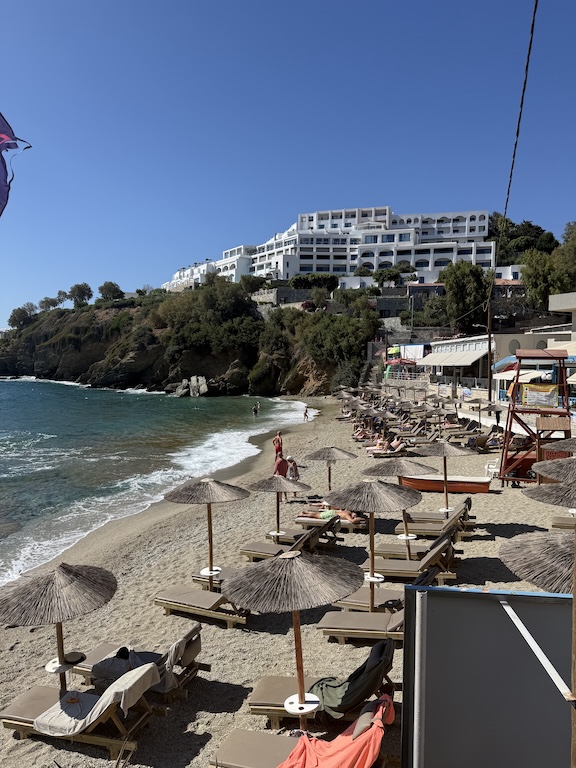 On our quest for calmer waters, we eventually found a beach called Marathi. After a full day of swimming, we sought dinner nearby, which consisted of fist-sized cubes of feta and fresh vegetables and seafood.
 On our return flight, I found myself recognizing the Dutch landscape from the air, and was happy to be back.