

Week Six: More Adventures in Tibet and Around the City
Hello everyone! For my sixth week with Machik, I continued my research into Tibet's culture, history, and legal status under the PRC. Topics studied this week included China's Re-education Through Labor (RTL) system, which was abolished in 2013 (but continues on today in drug rehabilitation centers and similar "brainwashing" centers), the work of women's organizations in providing legal aid to women in China, particularly in rural areas, and the high rate and speed with which China carries out the death penalty (but also the important advocacy work that Chinese defense lawyers provide for their clients in response).
I also took on the project of researching intergenerational trauma and healing in immigrant communities of color as part of my support for this year's upcoming Machik Weekend. Along with the adopting the theme of Intergenerational Healing, this year Machik is also hoping to focus on the Tibetan immigrant community of Minnesota, which is part of why it is being held in Minneapolis. By researching the history of intergenerational trauma in immigrant communities of color, and finding methods and techniques used to promote healing, I hope my work will be able to help the Minnesota Tibetan community, along with everyone else who attends Machik Weekend.
Along with my work this week, I also had the chance to visit the National Museum of African American History and Culture. The museum is a incredibly rich, thorough overview of American history through an African-American lens, covering all the way from the transatlantic slave trade to the election of President Barack Obama. In every exhibit I saw so much truth, resilience, and strength, even when it came alongside vast suffering and hardship. Woven into the fabric of the exhibit were both legal embarrassments and triumphs as well - from the reviled Dred Scott and Plessy v. Ferguson decisions, to the the victory of Brown v. Board of Education. As much of this exhibit is a great overview of African-American history and culture, it is also a pointed reminder to those of us in the legal profession to do better and always fight for what is right.

As it relates to Machik and the Tibetan people, I was particularly struck by the display containing Mary Ann Shadd Cary's message leaving America. After the Dred Scott decision, she published this message encouraging immigration to Canada. However, many African-Americans instead chose to stay, arguing that they had literally built America and deserved to live there, as it was their home too. I think this is a powerful sentiment that can be seen in oppressed communities everywhere. No one should be forced to stay in a place where the conditions are oppressive, but no one should be forced to leave their home, either. Machik works so that Tibetans inside Tibet will be able to live without threats to their language, culture, or ability to make decisions for themselves, while at the same time remaining on the plateau that has been their home for centuries.
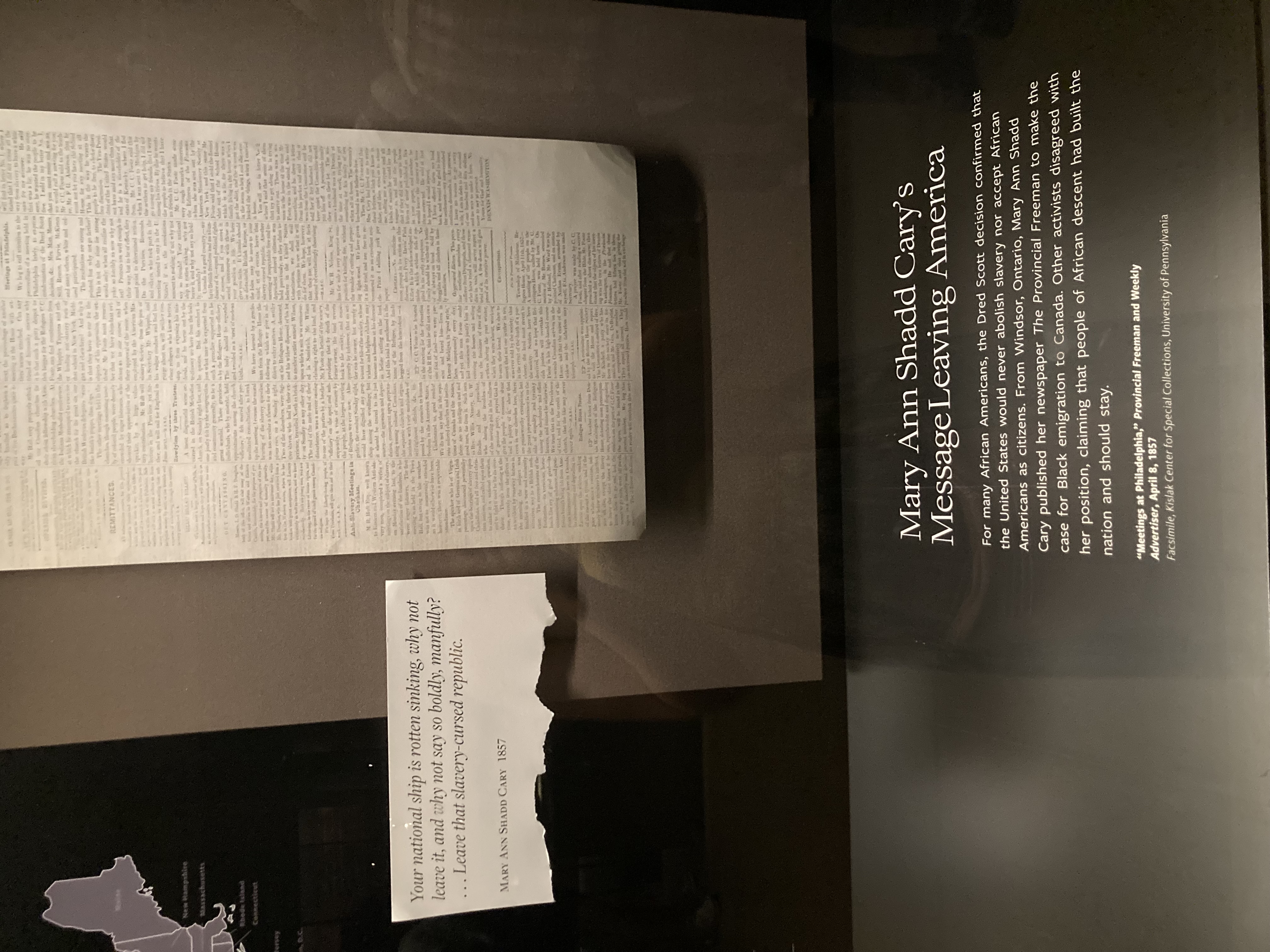 I also think this idea is relevant to many of us in America today, who may also feel that our "national ship is rotten sinking." While the sentiment is understandable, as is the desire to leave, I also understand those who wish to stay and fight in the hopes that America will one day actually embody the values and democracy and freedom it claims as its national heritage. I think there is much to be learned from the African-American activists, whose work brought justice and hope for so many people.
I would encourage anyone who is interested to visit the National Museum of African American History and Culture. For now, I'll see you all next week for another blog post!