

Legal Luminaries Gather for 2025 William & Mary Law Supreme Court Preview
William & Mary Law School hosted its 38th annual Supreme Court Preview on September 19-20, welcoming leading judges, scholars, advocates, and journalists from across the country to discuss the most consequential cases on the U.S. Supreme Court’s docket for the 2025–2026 term. See the gallery page.
The event, organized by the Institute of Bill of Rights Law (IBRL), featured a dynamic mix of panel discussions and a live moot court, offering attendees an in-depth look at the legal battles poised to reshape American law and society. See the list of experts.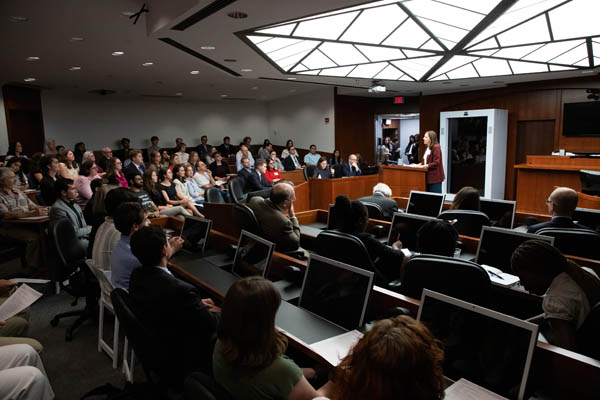
“I couldn’t have been more pleased with this year’s Preview,” said Professor Allison Orr Larsen who directs the IBRL. “The debates from the panelists were lively, and the presentations on the coming docket were very educational. I was particularly happy with the large crowd of students who came (both law students and undergraduates). Their questions to the experts were thoughtful and smart, just what you would expect from William & Mary students.”
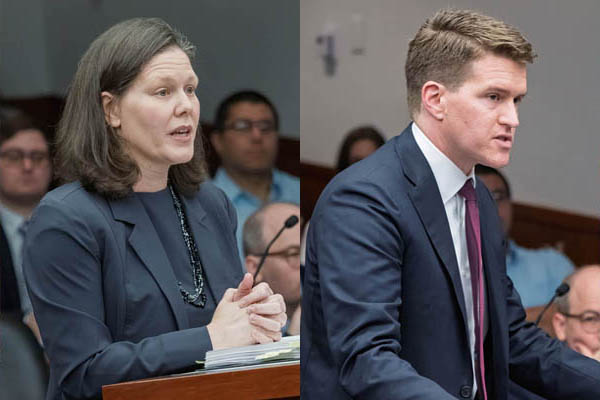 This year’s Preview opened with a moot court that saw advocates Jaime Santos (Partner and Co-Chair of Appellate & Supreme Court Litigation Team, Goodwin) and Ben Snyder (Partner and Co-Chair of the Supreme Court and Appellate Practice, Paul Hastings) arguing in the case of Chiles v. Salazar, a First Amendment challenge to Colorado’s 2019 ban on conversion therapy for minors.
The case centers on Kaley Chiles, a licensed mental health counselor and devout Christian, who argues that the statute prevents her from offering counseling aligned with her religious beliefs to clients seeking guidance on issues related to sexuality and gender identity. She maintains that her speech is being unlawfully restricted by the state’s law.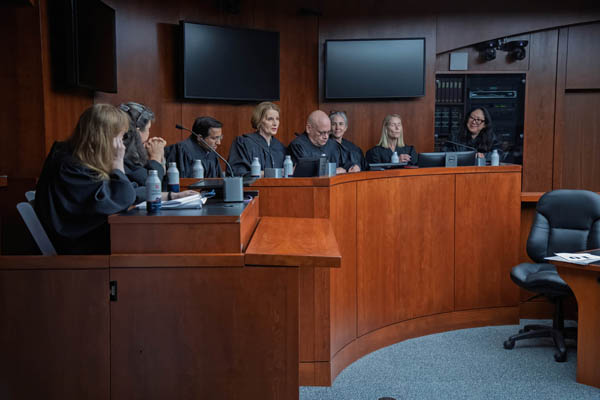
The Tenth Circuit previously upheld the law, ruling that it regulates professional conduct rather than speech, and therefore only needs to meet the rational basis standard—a threshold the law easily clears. The moot court revisited this decision, exploring whether the line between speech and conduct is as clear-cut as the lower court suggested, and questioning the “slippery slope” that would be created if states were allowed to regulate mental health counseling in this way.
As always, attendees were reminded that the moot court is an academic exercise. The positions taken by the advocates and justices do not reflect their personal views.
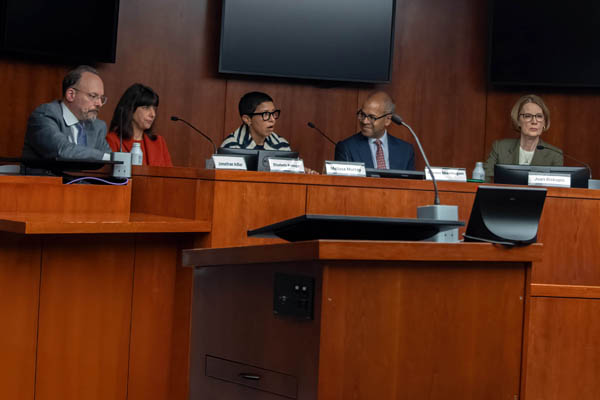 The moot court was followed by a panel, “Procedural Changes at the Court: What is Next for Nationwide Injunctions and the Emergency Docket?” Moderator Joan Biskupic (CNN) and experts Jonathan Adler (W&M Law), Elizabeth Prelogar (former U.S. Solicitor General), Melissa Murray (NYU Law), and Kannon Shanmugam (Paul Weiss) dissected the Supreme Court’s recent decision in Trump v. CASA, which curtailed the use of nationwide injunctions.
The panel also examined the evolving role of the Court’s emergency docket, often referred to as the “shadow docket,” and its implications for transparency and judicial process.
Saturday’s thematic panels covered the broader implications of the Court’s upcoming decisions.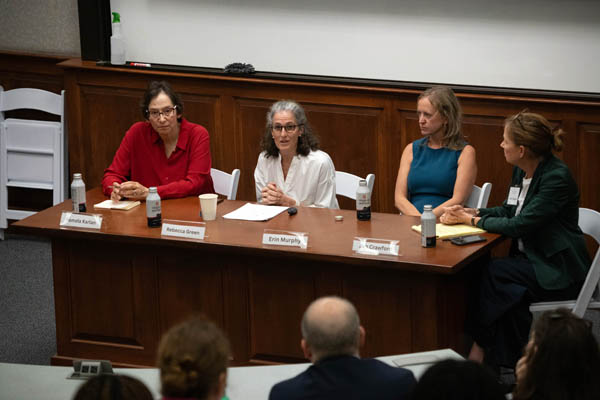
With major campaign finance litigation and a constitutional challenge to Section 2 of the Voting Rights Act in Louisiana’s redistricting case, experts on the opening “Election Law” panel speculated on potential election-related disputes that could surface this term.
In the next session, panelists discussed the wave of litigation targeting President Trump’s executive orders, ranging from tariff authority to funding restrictions on universities, and the broader constitutional questions they raise.
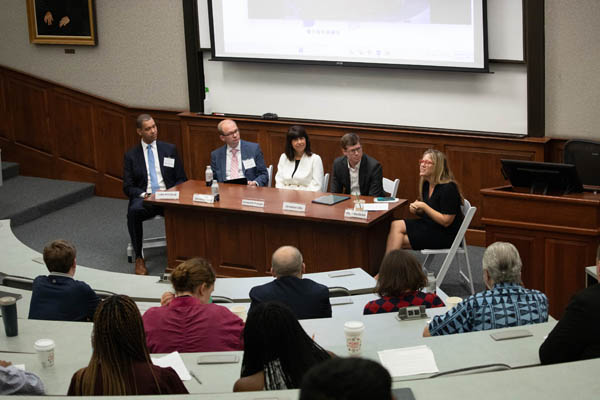 The morning concluded with “the Judge’s panel,” where a panel of appellate judges offered rare insights into how judicial minds are changed during deliberation. Topics included the influence of oral argument, timing of opinion drafting, and the role of institutional norms.
The afternoon began with Docket Deep Dives. Attendees chose from focused sessions on Administrative Law, Immigration Law, and Criminal Law, each offering granular analysis of current cases and trends.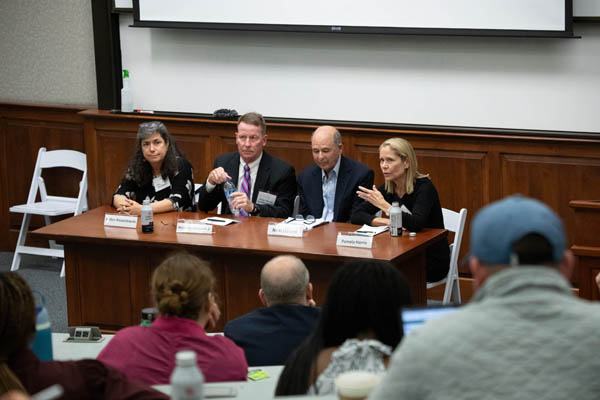
The next panel discussed pending “Civil Rights Cases.” This term’s docket includes pivotal cases on religious freedom, free speech, transgender athlete participation, Eighth Amendment challenges to the death penalty, and federal remedies under Heck v. Humphrey. Panelists debated the legal theories and forecasted outcomes.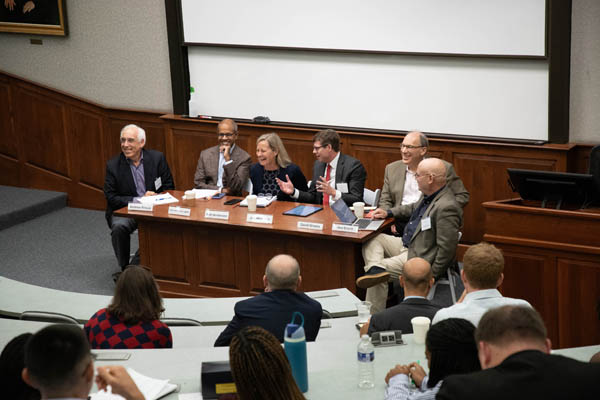
With Cox Communications v. Sony Music on the docket, the final panel, “The Supreme Court & The Internet,” examined the future of copyright liability for ISPs and broader implications of the Court’s engagement with internet-related disputes. The panel also touched on pending emergency applications involving state laws on age verification and parental consent for social media use.
The Preview’s design ensures accessibility for a general audience while offering unique opportunities for William & Mary Law students, who network with panelists at meals, receptions, and between sessions.
“The Supreme Court Preview is an amazing event that gives William & Mary law students the chance to learn directly from some of the nation’s leading constitutional law scholars,” said Caroline Decker ’26, Senior Notes Editor of the Bill of Rights Journal, Vol. 34. “The panel discussions offer a unique educational experience, providing thoughtful analysis and in-depth insight into some of the most pressing issues before the Court today.” 
Before the Preview started on Friday evening, the IBRL held its annual Constitution Day event. Former U.S. Solicitor General Prelogar and Professor Larsen explored topics of interest to students, including how the Solicitor General’s Office decides what positions to take in Supreme Court cases, how the SG prepares for oral argument, and advice for students interested in pursuing careers in appellate advocacy.
The Supreme Court Preview continues to serve as a vital forum for legal education and public engagement, reinforcing William & Mary Law School’s reputation as a national leader in constitutional scholarship.
Visit our gallery page for more about the 2025 Supreme Court Preview.