

How Emma Herwig ’28 Found Her Calling in Cultural Preservation Law
Emma Herwig is a first-year law student at William & Mary Law School, excitedly pursuing her J.D. a member of the Class of 2028. From the start of her academic journey, Emma has been drawn to a niche but significant area of law—one fueled by a unique passion that continues to inspire and motivate her every day.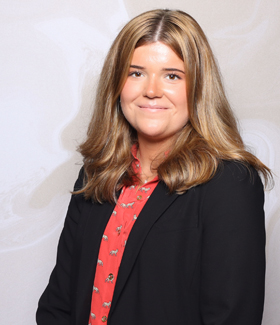
During her undergraduate studies at Colgate University, Emma had the remarkable opportunity to work with the Longyear Museum of Anthropology on a project critical to preserving Indigenous heritage. She played a key role in the museum’s repatriation efforts, ensuring the institution fulfilled its legal and ethical obligations under the Native American Graves Protection and Repatriation Act (NAGPRA). As a 1990 federal regulation, NAGPRA requires that universities and museums return ancestral remains and cultural items to their respective Indigenous communities. Emma worked hands-on to bring the Longyear Museum – and, by extension, Colgate University – into compliance with these federal standards, helping facilitate the return of ancestors and stolen belonging to Indigenous tribes. In this role, she grounded her work in respect, justice, and cultural restoration, ultimately finding her calling.
Emma’s commitment to NAGPRA compliance continues to shape her goals in the J.D. program. When she becomes a lawyer, she hopes to work closely with universities and museums to ensure that cultural heritage is protected and rightfully restored. Beyond NAGPRA, Emma is broadly interested in related legal fields, including museum law, Indigenous law, and intellectual property law—areas where she sees critical opportunities to connect legal practice with cultural preservation and advocacy. These interests reflect her belief that law can serve as a vital bridge, linking justice with the stories and histories of Indigenous peoples and protecting their legacy for future generations.
Emma’s experience extends beyond the classroom. She has worked as a research assistant and assistant curator for the Longyear Museum of Anthropology, roles that deepened her understanding of how museums function as stewards of history and culture. Additionally, she served as the curatorial and collections management fellow at the Adirondack Experience, a history and material culture museum located in New York’s Adirondack Park. These hands-on experiences have enriched her perspective on the practical side of museum and Indigenous law, and strengthened her resolve to make a difference through legal advocacy.
Emma’s story is a powerful reminder of how specialized passions can drive important work in law. Her dedication to honoring Indigenous communities and their heritage exemplifies the meaningful impact emerging legal leaders can have beyond the courtroom.
As she continues her journey at William & Mary Law School, Emma’s commitment to cultural preservation and justice inspires those around her and promises a bright future in a truly vital area of law.