

Myrisha Lewis Advances the Future of Reproductive Law and Earns University Wide Recognition
February proved to be an exceptional month for Professor Myrisha S. Lewis.
A leading scholar in health law, bioethics and reproductive policy at William & Mary Law School, Lewis celebrated two major milestones: the publication of her groundbreaking new book and her selection for a significant university award.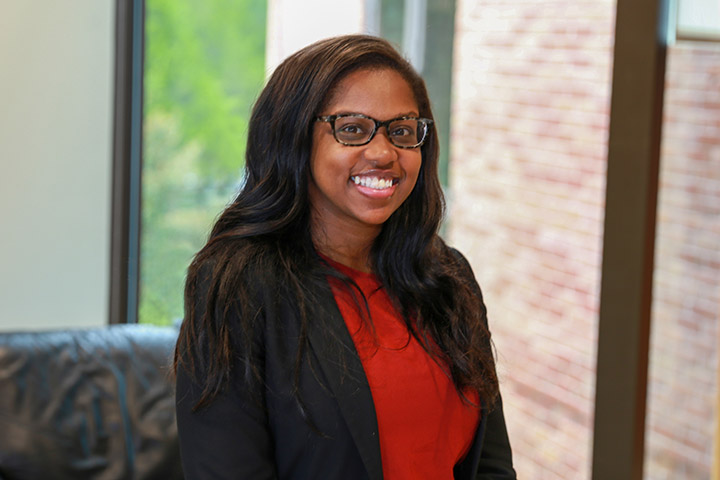
Lewis’s new book, Regulating Conception: Science, Politics, and Reproductive Genetic Innovation (New York University Press), offers a timely and incisive analysis of the complex legal landscape surrounding assisted reproductive technology (ART) and reproductive genetic innovation.
The study challenges the widespread assumption that ART is “minimally regulated.” Instead, Lewis uncovers a system of hidden federal oversight, revealing how agencies rely on letters, advisories, and informal communications to curtail emerging reproductive technologies—particularly when IVF is combined with genetic modification or substitution.
These opaque practices, she argues, restrict access to reproductive genetic innovations, reinforce inequities in fertility care, and obscure the true extent of federal influence. Regulating Conception ultimately calls for transparent, minimally burdensome regulation that protects reproductive rights while fostering responsible scientific development.
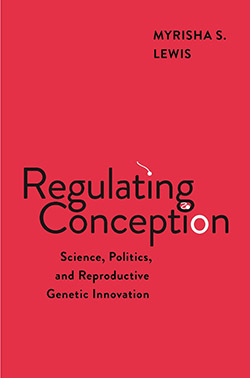 In addition to her book’s release, Lewis was selected as a recipient of the 2026 Alumni Fellowship Award, one of William & Mary’s highest honors for early-career faculty. Endowed by the undergraduate Class of 1968 and bestowed upon just five professors each year, the award recognizes exceptional achievement in teaching, mentorship and scholarship.
“Professor Lewis exemplifies the very best of our law school’s scholarly community,” said A. Benjamin Spencer, Dean and Trustee Professor. “Publishing key scholarship that advances the national conversation on such an important topic, and receiving a banner faculty award from the university, testifies to her sustained excellence in teaching, research, and service.”
Lewis’s scholarly voice is grounded in a career that bridges government service, legal practice, and academia. She earned her A.B. in Government from Harvard College and her J.D. from Columbia Law School, where she was a case law editor on the Columbia Journal of European Law.
Following law school, she served for four years at the U.S. Nuclear Regulatory Commission, including a seven‑month detail as a Special Assistant U.S. Attorney in the District of Columbia prosecuting domestic violence cases.
Before joining the William & Mary faculty in 2019, Lewis held appointments at Howard University School of Law and IIT Chicago-Kent College of Law. Her research examines how health, family, and criminal law adapt to emerging scientific technologies, with expertise in health law, family law, administrative law, and bioethics.
In 2018, she was one of only four scholars nationwide selected as a Health Law Scholar by the American Society of Law, Medicine and Ethics and the Center for Health Law Studies at Saint Louis University.
Lewis has published widely in leading law reviews, including Pace Law Review, Administrative Law Review, Houston Journal of Health Law and Policy, SMU Law Review, Seton Hall Law Review, American Journal of Law and Medicine, and Temple Law Review, among many others.
Recently, she contributed a chapter titled “Reproductive Innovation and Reproductive Exceptionalism: How Private Health Insurance Coverage of Fertility Treatment Complements Hostile Governmental Action and Expands Access to Assisted Reproduction in the United States” to Health Law as Private Law, published by Cambridge University Press (2025).
Fluent in French and Spanish and a member of the New York Bar, Lewis continues to shape the national conversation on reproductive rights, scientific innovation, and the role of law in rapidly evolving medical fields.
Her latest book is available at New York University Press and on Amazon.