

Scholarship Sheds Light on Origin of Virginia’s Seal and Ties to William & Mary Law School
Mitch Brown, assistant professor of classics at William & Mary, is drawing fresh attention to the intellectual legacy of George Wythe, William & Mary Law School’s, and America’s, first law professor and a principal designer of the Commonwealth’s iconic emblem.
And the George Wythe Collection and online Wythepedia at William & Mary Law School’s Wolf Law Library helped.
Brown’s recently published analysis revisits the origins of the motto Sic Semper Tyrannis, revealing how Wythe may have relied on classical sources—including a copy of Plutarch’s Lives, a copy of which is housed today in the George Wythe Collection—to craft the phrase that has endured for nearly two and a half centuries.
“Wythe’s intellectual pursuits and, especially, his classicism had a profound impact on the history of the American Revolution and the Early Republic,” Brown said. “His adaptation of ancient Greek literature to create the motto attests to his influence. Other founders turned to Wythe for guidance on various matters due to his knowledge of the Greek and Roman ideas.”
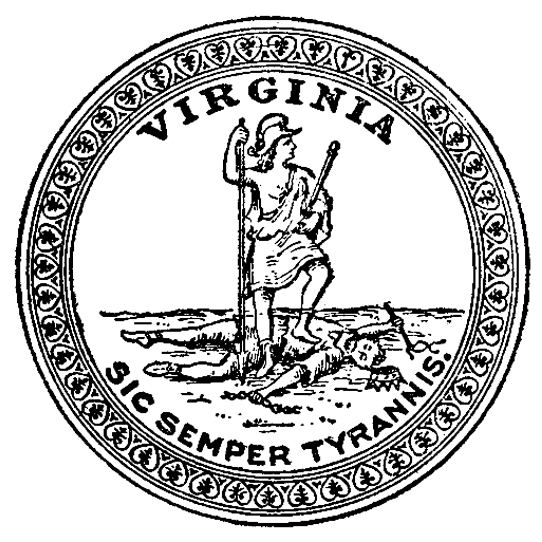 The year 2026 marks a wave of commemorations across the Commonwealth as Virginia prepares for the nation’s 250th anniversary. Public attention has increasingly returned to the symbols, ideas and individuals that shaped both the state and the young republic during the Revolutionary era. The Seal of Virginia, adopted in July 1776 by the Virginia Convention, is among the most recognizable artifacts of that moment, depicting the Roman figure Virtus triumphant over the fallen figure of Tyranny, accompanied by the motto Sic Semper Tyrannis.
Its creation was entrusted to a committee that included Wythe, who not only helped design the imagery but is widely believed to have authored the descriptive language that still structures the seal today. Wythe’s classical training and deep engagement with ancient literature strongly influenced the seal’s symbolism and message.
In his January 2026 article, “Sic Semper Tyrannis Revisited,” Brown revisits earlier scholarship by classicist Mike Fontaine, who proposed that Wythe’s Latin motto derives from Plutarch’s account of Scipio Aemilianus, in which the Roman statesman quotes a line from Homer’s Odyssey in reaction to political violence. Plutarch records the line as “ὡς ἀπόλοιτο καὶ ἄλλος, ὅτις τοιαῦτά γε ῥέζοι” — “And so perish all who do the same.” Brown’s research builds on this interpretation by exploring Wythe’s likely access to such texts.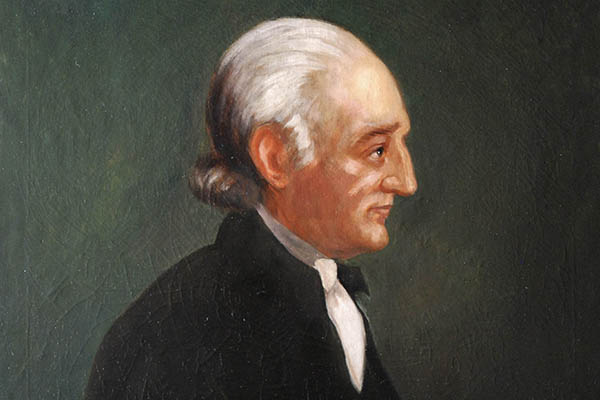
Crucially, Brown notes that the Law School’s George Wythe Collection includes a translated edition of Plutarch’s Lives, a set of volumes Brown consulted in person. Although Jefferson’s posthumous inventory of Wythe’s library lists multiple editions of the Odyssey and one translation of Plutarch, Brown argues that Wythe’s classical fluency and documented habit of consulting Greek sources make it plausible that Wythe was drawing directly from Plutarch’s telling of the Homeric line, not from Homer alone.
“Thanks to the Law School’s Wythe Collection, I was able to consult the very edition of Plutarch’s Lives that Wythe possessed, which provided more evidence that he adapted the motto from Plutarch,” Brown said. “This article is just one example of how William & Mary—due to both the Wythe Collection and Wythepedia—is an important center for the study of the American Revolution’s intellectual history.”
Modern historians agree that Virginia’s seal was conceived in a moment of intense revolutionary sentiment, when rejecting monarchy and embracing republican virtue carried powerful political charge. The seal’s depiction of Virtus, the Amazon‑like embodiment of civic strength, standing over a defeated tyrant with broken chains, reflects an intentional turn toward Roman republican iconography.
Wythe’s involvement in the seal’s design thus represents both artistic participation and the intellectual currents shaping the Commonwealth’s earliest legal and political frameworks. Wythe, who taught Thomas Jefferson, incorporated classical reasoning into judicial decisions and scholarly work. His use of ancient models meshed naturally with the Convention’s desire to cast Virginia as an heir to classical ideals of liberty and civic virtue.
And thanks to the Law School’s stewardship of the George Wythe Collection and Wythepedia, Wythe’s work remains accessible to scholars and citizens eager to understand the enduring legacy of Virginia’s founding generation.
About Wythepedia
Wythepedia is a public resource for George Wythe information and as a companion for the Wolf Law Library’s George Wythe Collection. Launched privately on February 15, 2013, it has been viewed more than 36 million times since its public launch on May 1, 2014.