

William & Mary Law School Brings Industry Leaders Together for Inaugural Future of Energy Conference
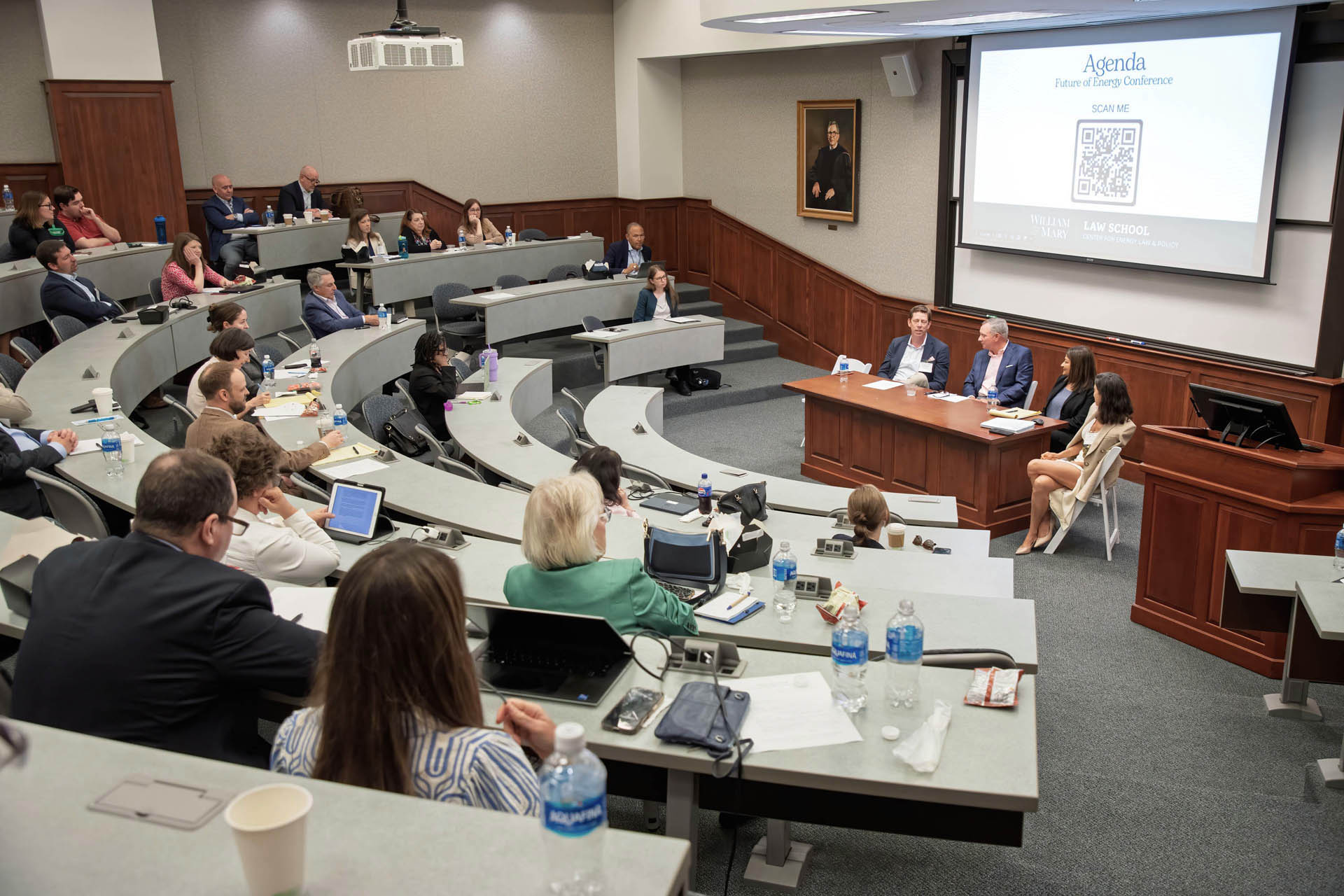
Energy leaders, policymakers and legal experts gathered in Williamsburg from May 19–21 for William & Mary Law School’s inaugural Future of Energy Conference, an event examining the challenges and opportunities shaping the U.S. energy landscape. View the gallery.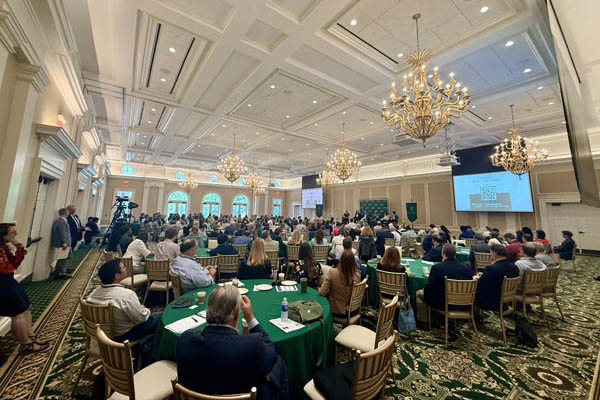
Organized by Mark C. Christie, Director of the Law School’s Center for Energy Law and Policy and a former Chairman of the Federal Energy Regulatory Commission (FERC), the conference took place at a symbolic moment as the nation approaches the 250th anniversary of American independence.
Christie and organizers framed the event as a forward-looking forum to explore how energy policy, markets and infrastructure may evolve in the decades ahead.
“This gathering is especially meaningful as we celebrate the recent launch of our Center for Energy Law & Policy—a hub for rigorous scholarship, practical engagement and thoughtful debate grounded in facts, not ideology,” said A. Benjamin Spencer, Dean and Trustee Professor. “Through the Center, we are committed to advancing leadership in energy law and bringing together policymakers, industry leaders, lawyers and scholars to shape solutions that matter.”
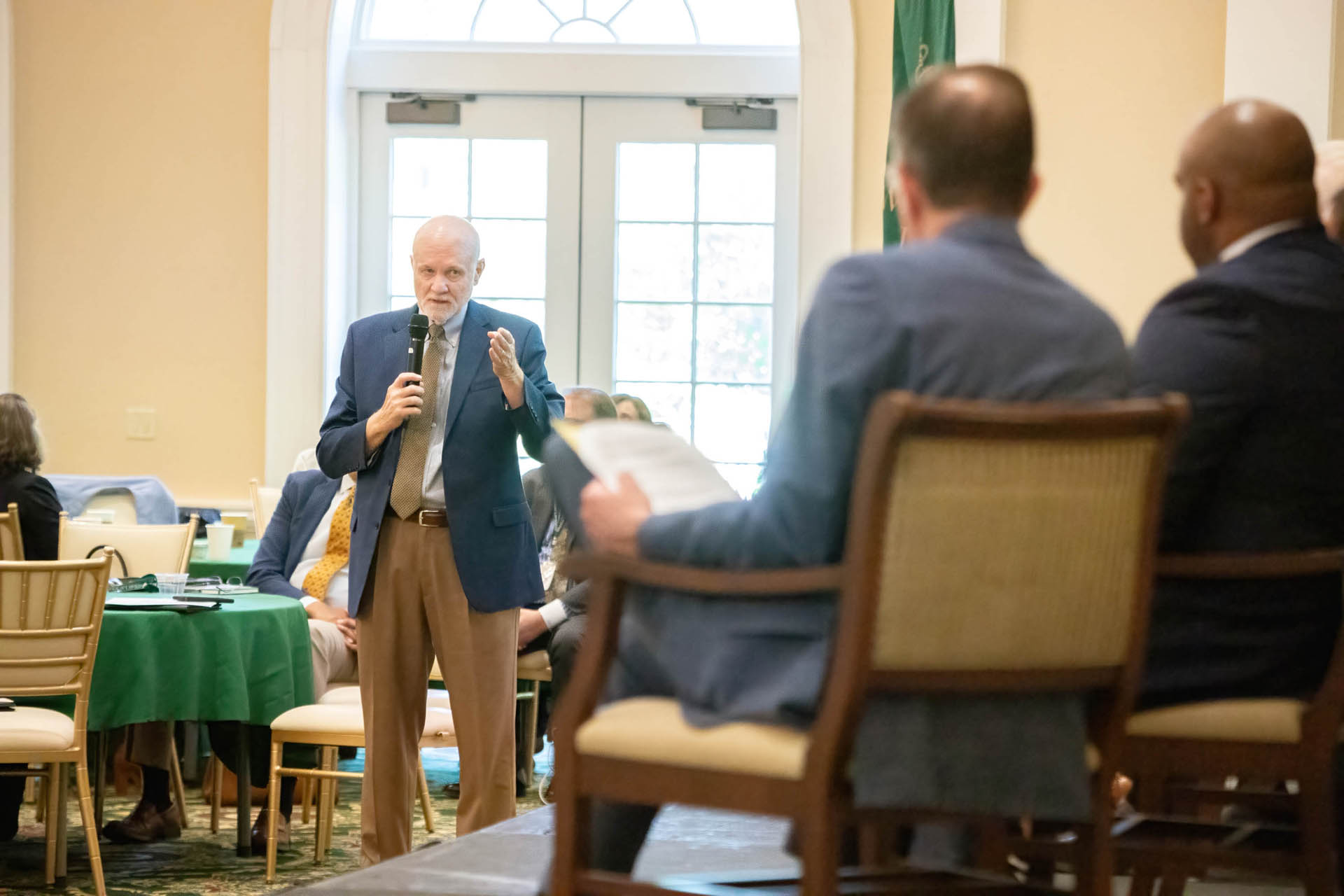 Held at William & Mary’s Alumni House, the conference drew participants from across the Mid-Atlantic, including representatives from government agencies, private industry and academia. Attendees engaged in panel discussions, networking sessions and policy-focused conversations addressing urgent issues facing the sector.
The conference opened with a high-profile keynote panel on the future of FERC. Four former chairs of FERC — Neil Chatterjee, Willie Phillips, Richard Glick and Joe Kelliher — shared insights on federal oversight, regulatory priorities and the agency’s evolving role amid rapid changes in energy production and demand.
Subsequent panels explored a range of pressing topics, including the rapid growth of data centers in Virginia and across the PJM Interconnection region, concerns about resource adequacy and energy markets, and ongoing debates over PJM governance. Additional discussions focused on reliability and affordability challenges facing Virginia’s power grid, underscoring the tension between rising demand and the need for stable, cost-effective energy supply.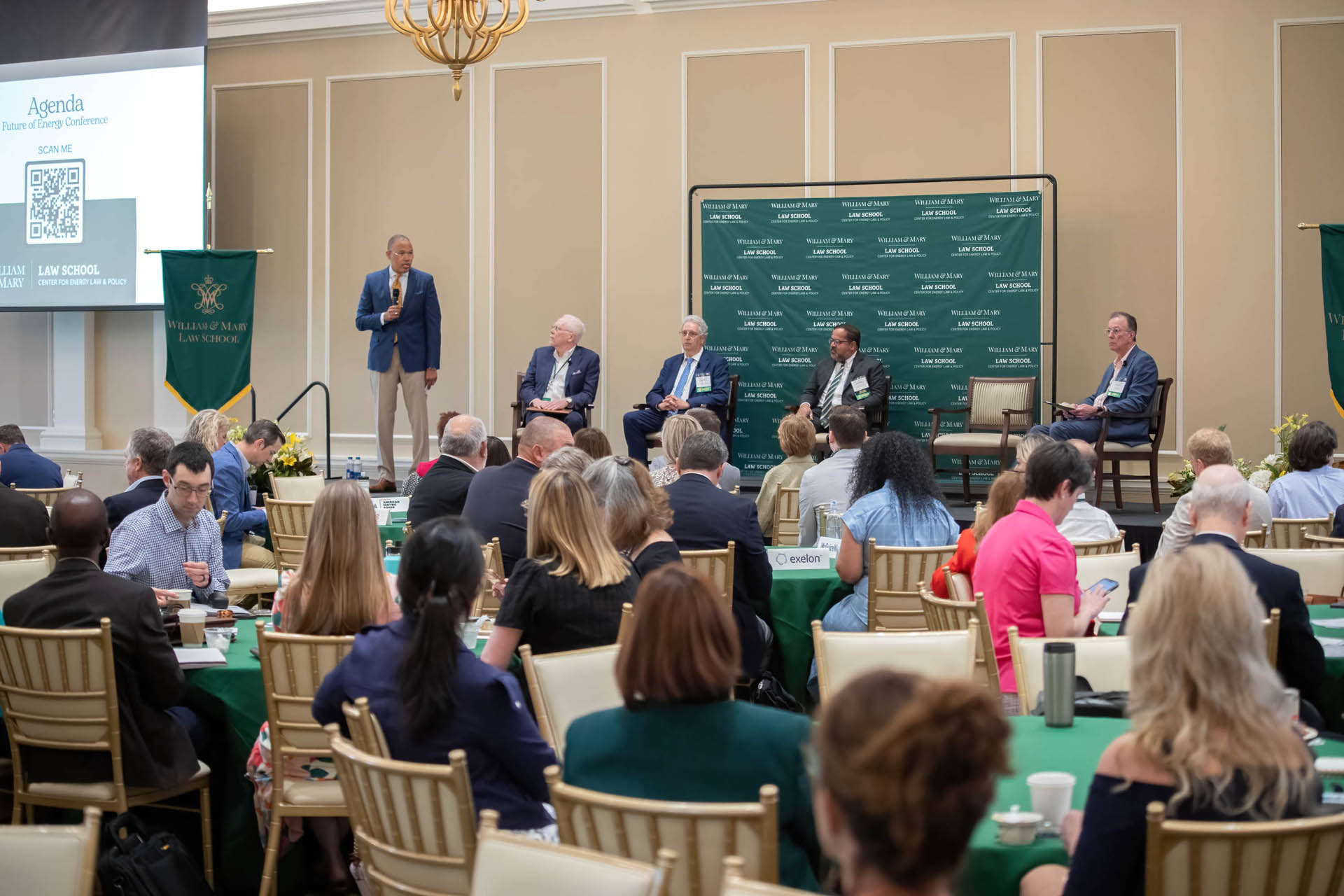
Speakers represented a broad cross-section of the energy ecosystem, including PJM, Dominion Energy, American Electric Power, Southern Gas, the Virginia State Corporation Commission, the Southern Environmental Law Center, Google, and LS Power, among others.
For Claire Gardner, Associate Attorney at GreeneHurlocker, PLC, the conference was “a smashing success.” And Brian Greene, Co-Managing Member of GreeneHurlocker, gave “big props to Mark C. Christie, A. Benjamin Spencer, and their team for assembling high-quality panels unafraid to tackle complex energy issues.”
Organizers emphasized that the conference was designed as a practical, timely platform for understanding the forces reshaping the energy industry — from federal regulation to emerging technologies and infrastructure demands. With issues such as data center expansion and grid reliability at the forefront, discussions reflected broader national concerns about balancing economic growth with sustainable and resilient energy systems.
 “We learned a lot, appreciated the candor, and came away with new ideas for strengthening our regional grid while continuing to pursue more affordable and clean energy solutions,” said Carrie Hearne, Executive Director of the Virginia Commission on Electric Utility Regulation.
Against the historic backdrop of Williamsburg, the event highlighted both the urgency and complexity of planning for the future of energy, offering attendees a valuable opportunity to exchange ideas at a pivotal moment for the industry.
Leah Horan, FERC Analyst at Dominion Energy, noted that it was “valuable to have a forum where different perspectives can be shared on the challenges of maintaining reliability and affordability amid growing energy demand.”
Discussions on data center growth, transmission constraints, generation capacity and long-term infrastructure planning were described as thoughtful, substantive and, at times, sobering — underscoring Virginia’s central role in these debates.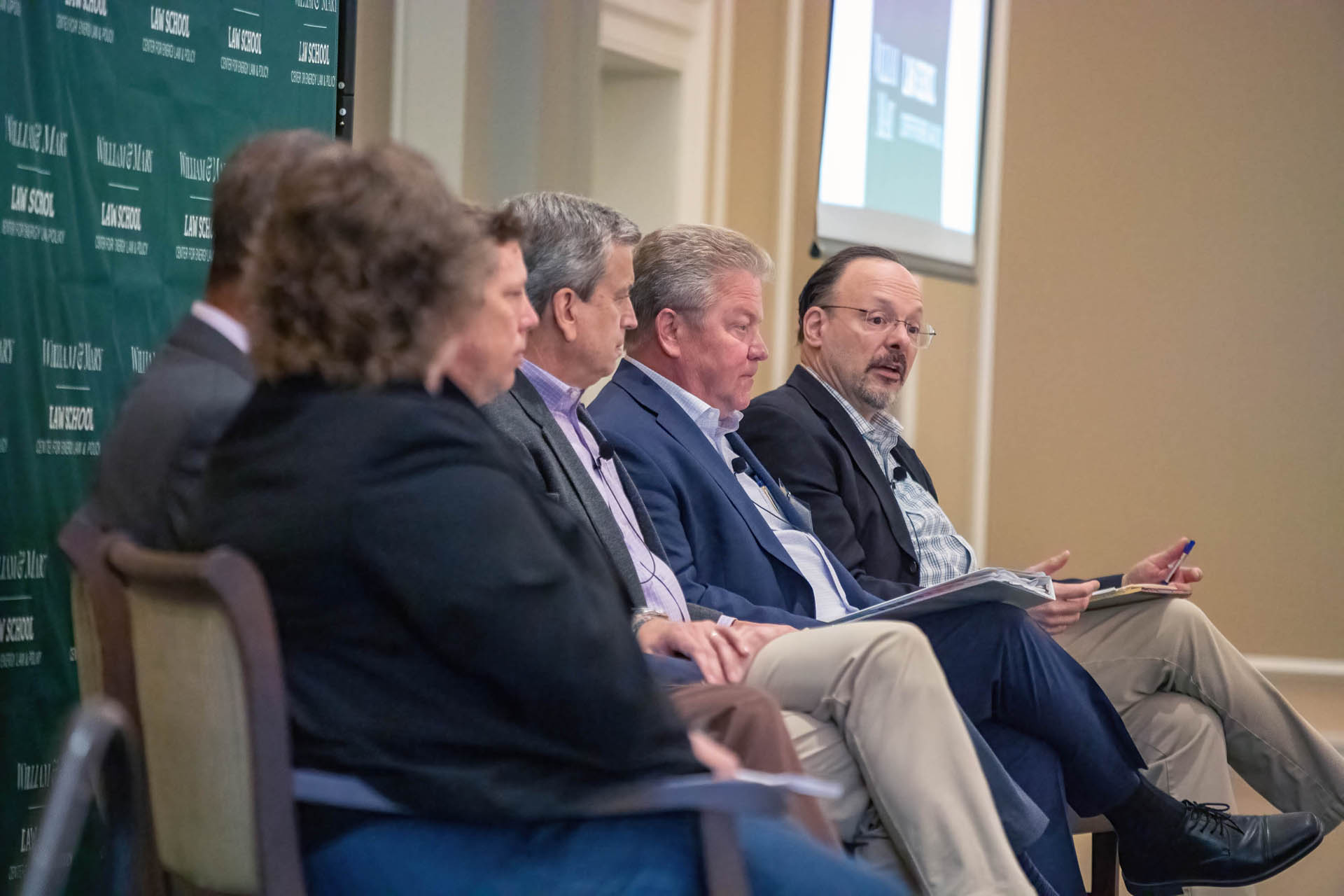
Brent Archer, President, Archer Consulting Services LLC, took many pages of notes during the conference and was glad he did. “The conversations among the expert panelists were meaningful, insightful and sometimes challenging,” he said. “The energy challenges facing Virginia are real, and they are complex. Solutions will come not from social media posts, news releases and repeating narrative talking points, but from informed, fact-based and honest discussions at forums like this one.”
David Botkins, Chief Executive Officer and Founder of Botkins Strategies, LLC, was likewise impressed. “Fittingly, these discussions took place in Williamsburg—a place long associated with governance, stewardship and long-range thinking,” he said.
Current law students and alumni returned to campus for the event. “I felt immense pride returning to my alma mater as a practicing attorney and participating in conversations about some of today’s most pressing energy issues,” said Shianne Randolph B.A. ’21, J.D. ’25, Energy Associate at Christian & Barton, LLP.
 For legal professionals, the event also offered a Continuing Legal Education (CLE) program, providing 7.5 hours of Virginia CLE credit, including ethics training. The program was held at William & Mary Law School following the main conference sessions.
Media presence at the event was strong, with news coverage appearing even as the proceedings concluded. One report highlighted how a PJM official warned that uncertainty could increase if members choose to exit the grid operator, potentially destabilizing coordination across participating states (Bloomberg Law). At the same time, state officials are debating their respective roles in addressing surging electricity demand driven in part by the rapid expansion of data centers, raising questions about governance and planning within the PJM footprint (RTO Insider). These issues were further explored in another piece from RTO Insider.
More recent coverage comes from S&P Global on the need for an increased role at PJM and FERC leaders citing risks before the upcoming US Supreme Court ruling.
“Thank you to all our great panelists,” Mark Christie said. “Each panel did a serious deep dive into energy issues in a way that many attending said was unprecedented, which was the goal.”
Video of the conference will be available soon. Here is a gallery of the event.
About the Center for Energy Law and Policy
Created in 2025, the Center for Energy Law and Policy, provides a neutral forum for analysis, discussion, and debate of the most pressing energy issues facing Virginia, the United States and the world. The Center's goal is to ensure that different points of view are allowed to compete in a marketplace of ideas in the consideration of pressing energy policy challenges, and provides opportunities for students to hear from industry, government, and non-profit leaders in the energy field, by bringing leaders to campus for guest lectures, career presentations, and individual or small group meetings. The Center also plans to provide opportunities for students to write research papers, policy papers, and participate in internships.