

Meet Election Law Alumni
Participants in the Election Law Program go on to make waves in the election law field — as law firm partners, nonprofit lawyers, election administrators, policy reformers, and much more. Below is a sampling of alumni who have built successful careers in the election law field.
Max Weiss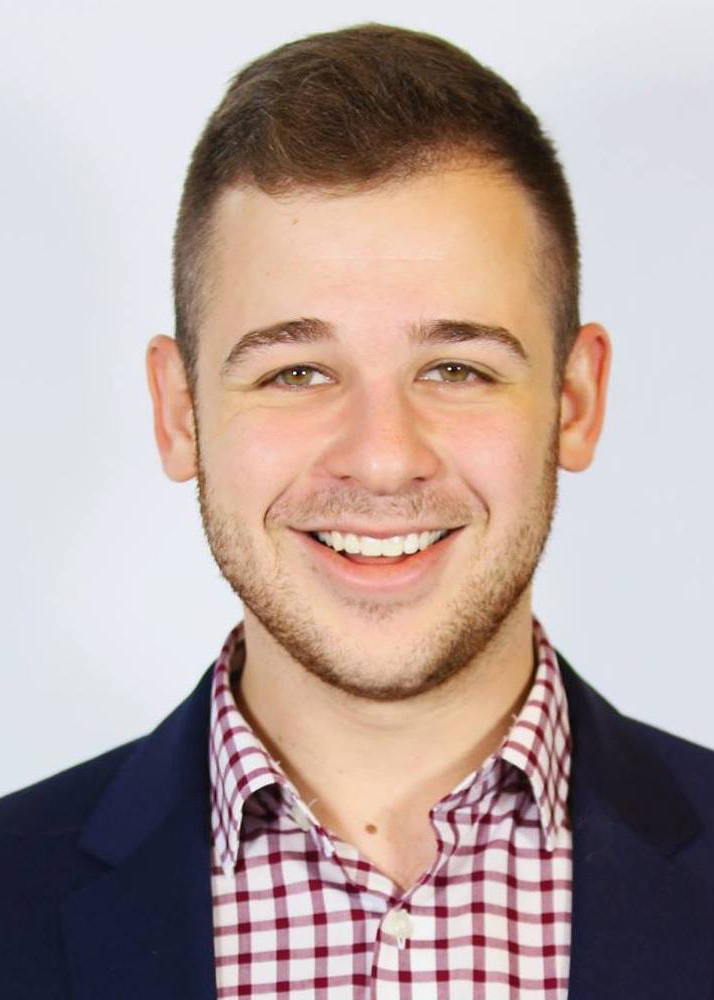
Max Weiss (J.D. 2022) is an associate at Venable LLP and has worked on a variety of matters involving campaign finance, lobbying reporting, ethics work, and nonprofit finance obligations in the firm’s political law group. Max’s student internship with the Federal Election Commission provided him with insight into the ways in which regulations are drafted and enforced. He used this insight in the private sector to work with campaigns and nonprofits as they navigated the larger regulatory landscape. Max also gained invaluable litigation experience as a student intern for the DOJ’s Voting Section in its Civil Rights Division, where he cultivated a variety of skills, ranging from specialized expertise with election law to a more general facility with the nuances of being a litigator.

Helen Brewer
Helen Brewer is a Policy Specialist at the National Conference on State Legislatures, where she focuses on redistricting, ethics and campaign finance as part of the Elections and Redistricting Program. She also tracks statewide ballot measures and works on a variety of election administration topics. Prior to joining NCSL, Helen was a Legal Fellow at the Fair Elections Center, where she provided legal research and analysis for cutting edge voting rights litigation in state and federal courts. She also worked as a Legal Analyst at the Electoral Innovation Lab & Princeton Gerrymandering Project, where advocated for fair redistricting practices and reforms. As a student at William & Mary, Helen served as Chief Financial Officer of the Election Law Society and Deputy Editor-in-Chief of the State of Elections Blog. Helen was introduced to the world of elections and voting rights through her campaign finance work as a Summer Democracy Fellow on a gubernatorial campaign in her home state of Colorado before starting law school.
 Camden Kelliher
Camden Kelliher is Acting General Counsel at the U.S. Election Assistance Commission, an independent, bipartisan commission charged with developing guidance to meet Help America Vote Act (HAVA) requirements, adopting voluntary voting system guidelines, and serving as a national clearinghouse of information on election administration. Camden has been at the EAC since he graduated law school, where he originally started as a Law Clerk.
Camden is a double William & Mary graduate, having earned both his Master’s in Public Policy and his JD in 2021. While in law school, he served as an Election Law Fellow and as a Thomas Jefferson Fellow with the National Center for State Courts.
Andrew Pardue
As an Associate at Holtzman Vogel, Andrew Pardue specializes in constitutional law, election law, and litigation, and he counsels nonprofit clients on corporate governance and IRS and FEC compliance. Prior to joining Holtzman Vogel, Andrew was a law clerk at the D.C. Criminal Code Reform Commission and the Office of the Virginia Attorney General Civil Litigation Division, Consumer Protection Section. During law school, Andrew interned in the chambers of Magistrate Judge Lawrence Leonard of the United States District Court for the Eastern District of Virginia.
At William & Mary, Andrew served as Senior Notes Editor on Law Review, President of the Federalist Society, Vice President of the Election Law Society, Dean's Associate and Graduate Research Fellow for William & Mary's Center for the Study of Law and Markets, and authored a published student note on congressional investigations of the executive branch. Andrew received his B.A. in Government and a secondary concentration in Economics from Harvard University.
 Drew Marvel
Drew Marvel serves as Associate Counsel to the National Republican Congressional Committee (NRCC). Prior to the NRCC, Drew was Associate Counsel at Fair Lines America, Inc. During law school, Drew interned at the U.S. Election Assistance Commission, the Virginia Department of Elections, and the National Conference of State Legislatures in the Elections & Redistricting department. Drew also interned for the Maryland Office of the Attorney General.
At William & Mary, Drew was an Articles Editor of the Bill of Rights Law Journal and was President of the Election Law Society. He received his B.A. in Political Science and Government from the University of Maryland Baltimore County.
Aaron Barden
As an Associate at Sandler Reiff Lamb Rosenstein & Birkenstock, P.C., Aaron Barden advises clients on compliance with lobbying, ethics, and campaign finance issues at the federal, state, and local levels as well as on nonprofit formation and governance.
Prior to Sandler Reiff in 2020, Aaron was a Legal & Policy Analyst for the Princeton Gerrymandering Project, working on nonpartisan redistricting reform. During law school, Aaron interned at the Office of the Virginia Attorney General, Equally American Legal Defense & Education Fund, and OneVirginia2021.
At William & Mary, Barden served as Co-President of the Election Law Society and was a member of the Bill of Rights Journal, who published his note on Puerto Rico and its right to vote for presidential electors. He received his B.A. in Political Science from Virginia Commonwealth University.
Caleb Hays
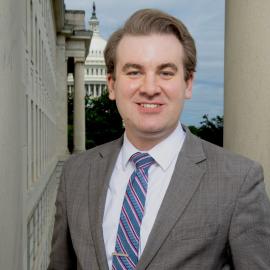
Caleb J. Hays serves as Chief Counsel and Principal for Section 4 Strategies, an election law firm in Alexandria, Virginia. As part of his practice, Caleb serves as Chief Policy Counsel for the Center for Election Confidence, as Special Counsel for Elections for the Republican National Lawyers Association, and as National Election Integrity Counsel for the NRCC.
In the 116th-118th Congresses, Caleb served as senior staff for the Committee on House Administration, a House Leadership committee with jurisdiction over federal elections and House operations and where he directed the House Republican Conference’s election policy conversation. Most recently, Caleb served as the Committee’s General Counsel & Deputy Staff Director and as Staff Director for the Subcommittee on Elections, provided counsel to the Chairman and the Committee, sat as committee Parliamentarian, and managed the legal team.
Previously, Caleb was an Associate at Holtzman Vogel, where he counseled campaigns, party committees, and other groups engaged in protected political speech.
In 2020, Caleb was named an “Outstanding Alumnus” by the William & Mary Election Law Society. He is a 2017 graduate of William & Mary Law School.
 Allison Davis Tuck
Allison is Chief Counsel (Minority) at the U.S. Senate Committee on Rules and Administration. Previously, she was Counsel to Vice Chairman Sean J. Cooksey at the Federal Election Commission. Allison also previously served as Counsel to FEC Chairman Allen Dickerson, and prior to that was an associate at the DC office of Jones Day. While in private practice, Allison focused on election law, campaign finance, lobbying and advocacy, government ethics, and pay-to-play matters at the federal, state, and local levels. At William & Mary Law, Allison served as William & Mary Election Law Society Symposium Co-Chair with Pete Rechter '16 during her first year and then ELS Co-President (again with Pete) her second year. During law school, Allison clerked for the General Counsel of the National Republican Senatorial Committee throughout the 2014 election cycle. She also clerked for Commissioner Caroline Hunter at the Federal Election Commission, where she assisted in drafting Advisory Opinions and Statements of Reasons for Matters Under Review. Prior to joining Jones Day, Allison worked at Clark Hill, a boutique political law firm in DC.

Shanna Ports
Shanna Ports is Senior Legal Counsel on the Campaign Legal Center's campaign finance team, which seeks to advance transparency and accountability in our political system using a variety of legal strategies. Prior to joining CLC, Shanna was an Associate in the Political Law Group at Perkins Coie, and subsequently Counsel at Elias Law Group after it spun off from Perkins Coie. In those roles, she advised clients on federal and state campaign finance laws and participated in campaign finance, redistricting, and post-election litigation. Before that, Shanna was an attorney in the Federal Election Commission's Enforcement Division, where she investigated complaints and advised the Commission on complex legal issues. At William & Mary, Shanna was an Election Law Fellow. After law school, Shanna clerked on the U.S. Court of Appeals for the Eleventh Circuit.
 Jonathan Peterson
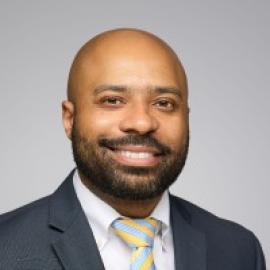
Jonathan Peterson is an associate in the Political Law practice group at Elias Law Group, where he helps clients navigate complex campaign finance laws, FEC enforcement actions, advisory opinions, and other agency actions. Jonathan also advises campaigns, officeholders, PACs, party committees, and other organizations on government ethics, state campaign finance laws, election administration, voting rights, and other election and compliance matters. Before Elias Law Group, Jonathan spent four years working at the FEC, first as an enforcement attorney and then as counsel to Commissioners Broussard, Weintraub, and Walther. In his role as counsel, Jonathan advised Commissioners on enforcement, litigation, and policy matters pending before the agency. Prior to the FEC, Jonathan represented clients in complex litigation in state court and federal district and appellate courts across the country.
Jonathan clerked for the Hon. Loretta C. Biggs of the U.S. District Court for the Middle District Court of North Carolina. While at William & Mary, Jonathan served as President of the Black Law Students Association and was the symposium director for the Election Law Society.
 Nick Mueller
Mueller is currently a policy analyst at the Federal Election Commission. Prior to joining the FEC, Nick worked as an associate at the Richmond firm Durrette Crump where he helped litigate a redistricting suit alleging that Virginia line drawers violated the compactness requirement in the Virginia Constitution. He previously served as an independent consultant with OneVirginia2021, which advocates for redistricting reform in Virginia. As a consultant, Mueller provided research and counsel on redistricting law as it affects the efforts of the organization. Prior to working with OneVirginia2021, Mueller served as legal fellow in the Office of General Counsel for the National Education Association (NEA). His work focused on several election law matters, including preparing for litigation challenging state ballot issues and providing counsel for the NEA and its affiliates on campaign finance matters. He emphasized the political nature of the job, explaining that the NEA often advocates for legal positions and political causes at the same time.
A political person by nature, Mueller got involved in politics before entering law school. A few years after college, he worked on the Obama campaign in both Nevada and Ohio and the summer after his first year of law school, he worked on Capitol Hill. For those interested in pursuing careers that involve election law, Mueller strongly recommends getting involved in campaigns because they are both a great way to make contacts and gain valuable experience.
Mueller also found his experience as an Election Law Society member to be very useful. In his second year of law school, Mueller had the opportunity to join ELS’s Redistricting Team, which used software to draw redistricting maps for Virginia (editor’s note: Mueller’s map won the statewide contest as the best U.S. Congressional Map). He recommends that students interested in the field take election law classes but he also notes that students should think broadly about what other classes relate to election law. For example, Mueller wishes he had taken a tax law class because of its relevance to campaign finance issues. Finally, Mueller strongly suggested that students get involved on campus and, since election law is a niche specialty, he thinks it is important to try and get a summer position that offers experience in the field.
Brian Cannon
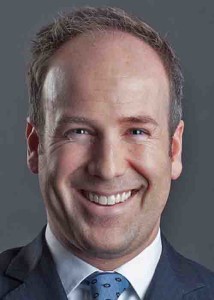
Brian Cannon is a double William & Mary graduate (JD '11, BA '04). As Director of Advocacy at FairVote, Brian leads advocacy efforts for key election reforms such as ranked choice voting. Brian previously served as Executive Director of the redistricting reform group OneVirginia2021 after over a decade of experience in non-profit leadership, community building, fundraising, and bipartisan advocacy on state policy issues. In that capacity, Brian successfully spearheaded the bipartisan effort to amend the Virginia state constitution to establish an independent redistricting commission. Previously, Brian worked as a consultant to startups and high-growth companies. While in law school, Brian served as an Election Law Society Co-President, studied election law, and helped his William & Mary Law School teammates craft a winning map during Virginia's 2011 statewide redistricting competition. Brian was also founding editor of the State of Elections blog, a student-run blog that reports on state election law topics.
Myron McClees
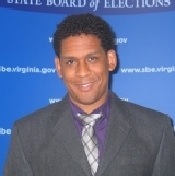
Myron McClees has served in a number of capacities practicing election law within the public sector. He served as policy counsel at the Virginia Supreme Court, as well as Policy Analyst at the Virginia State Board of Elections where he grappled with election-related disputes such as recounts, policy questions involving regulations and petitions, and where he wrote legislation that aimed to increase access to the ballot throughout the Commonwealth. Though he described his work as "heading feet first into the fire," he gathered as much experience as he could while a law student at William & Mary.
After his 1L year, Myron interned at the Board of Elections, trained as a poll worker for the 2008 election, and served at Election Protection in Hampton. After graduation, he accepted a post-graduate fellowship at the International Foundation for Electoral Systems where he worked on international elections. Myron also assisted members of the Organization for Security and Cooperation Europe in their efforts to analyze the transparency of elections here in the United States.
Myron comments that "The atmosphere at the law school is astounding" for assisting students in getting their ideas off the ground. He added, "every legal position I have had since I began the study of law has come directly through networking with my W&M classmates."

Brandis Zehr
As a Partner Wiley Rein in Washington, DC, Brandi advises candidates, officeholders, political parties, PACs, corporations, trade associations, and other organizations on compliance with all aspects of law concerning the political process, including state and federal campaign finance, ethics, lobbying, and pay-to-play laws. In addition to her work at Wiley Rein, Brandi has served in numerous capacities in the election law field including Counsel to Commissioner Lee E. Goodman at the Federal Election Commission, Deputy General Counsel to the Jeb Bush Presidential Campaign, Outside Counsel on Governor Tim Pawlenty's Presidential Campaign, Associate Counsel at the Republican National Committee, and Law Clerk at the National Republican Senatorial Committee. Brandi was a founding member of the Law School's Election Law Society and continues to contribute her considerable enthusiasm as a mentor for William & Mary ELS students interested in the field.
Jeff Palmore
Jeff Palmore came to William & Mary with a strong interest and background in elections. Jeff spent six years working in politics before he entered law school, including positions as Deputy Policy Director to Jerry Kilgore's 2005 gubernatorial campaign and as Campaign Manager to former Congresswoman Thelma Drake's 2004 congressional campaign. After law school, Jeff worked for Virginia Governor Robert McDonnell as both Deputy Counselor to the Governor and Director of Policy Development. In these roles, he worked on a wide range of issues (including election law) and was involved with setting the Governor's legislative agenda, crafting polices, assisting with the legislative redistricting process, and serving as in-house counsel to the Governor, the Cabinet, and the staff. Palmore is now an Associate at Reed Smith in Richmond.
During his time in law school, he proudly served as the President of the Election Law Society in his 2L year. He notes that the club's success was "a combined effort between many students, faculty, and the administration." The group helped create a vibrant election law avenue within the law school's curriculum, proposing new courses on a variety of subjects that helped provide a foundation for his professional path.

Liz Howard
Liz has held numerous prestigious political law positions since graduating from William & Mary Law. After serving as General Counsel of Rock the Vote and Deputy Commissioner for the Virginia Department of Elections, Liz now serves as Senior Counsel at the Brennan Center for Justice. Liz was previously an associate at Sandler Reiff, specializing in election law. Her practice included advising federal, state and local political committees and candidates; state and national parties; section 527 organizations; non-profit organizations and for-profit corporations. She counseled clients on complying with state and federal campaign finance and election laws; House and Senate ethics and gift rules; and lobbying and ethics compliance; and represented them before state and regulatory agencies.
Beginning her studies at William and Mary, Liz Howard brought a passion for politics and elections. Liz worked as the Chief Financial Officer for the Tennessee Democratic National Committee before law school, thus beginning law school with a first-hand understanding of campaign finance compliance standards and the work that law firms do to help clients in this area. Seeking more opportunities to engage those issues on campus and in her studies, Howard co-founded a new student organization, the Election Law Society, which has since served as the vehicle for many students to become involved in election law issues. Through her involvement with the Election Law Society, Howard took classes on campus and in Washington, D.C. where she interacted with election law experts and practitioners. "The opportunity to learn from practitioners in DC was truly phenomenal," she says, adding, "In essence, real-time learning using real-life scenarios."
Chris DeLacey
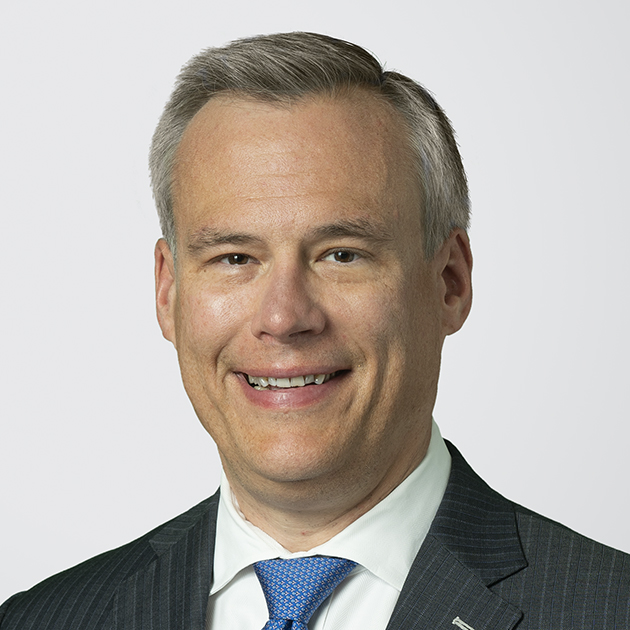
As Co-Chair of the Political Law group at Holland & Knight in Washington D.C., Chris DeLacy's practice includes a wide-variety of legal issues including campaign finance, government ethics, lobbying compliance, pay-to-play, white collar, non-profit, and tax. Chris has handled cases involving the Federal Election Commission, the Senate Ethics Committee, the Office of Congressional Ethics, Inspector General Investigations, Department of Justice investigations, the Maryland Board of Ethics, and the Texas Board of Ethics. However, the vast majority of his work involves advice related to political law compliance, which is intended to prevent issues from ever progressing to the investigation or enforcement stage.
“I have always been interested in politics and I was working in the U.S. Senate during the 2000 Florida recount and passage of the Bipartisan Campaign Reform Act of 2002. During this time I learned election law issues from a policy perspective. Once I entered private practice, I learned election law issues from the perspective of the regulated community. I discovered pretty quickly that the way Congress thinks things work is usually different from how they really work,” Chris says.
Most new laws in the area of political law are enacted in response to a scandal or major event. The Federal Election Campaign Act and Ethics in Government Act were passed in response to the Watergate scandal. The Help America Vote Act was passed in response to the 2000 Florida recount. The Honest Leadership and Open Government Act was passed in response to the Abramoff scandal. Chris explains, “So the next major piece of legislation in this area will likely be dictated by the next scandal or major event. One current issue is the future of the public financing system. However, there appears to be zero appetite in Congress to address this issue.”
For students interested in pursuing a similar path, Chris has a number of pieces of advice: “I would recommend students take accounting for lawyers, administrative law, advocacy regulation, campaign finance, corporations, election law, law & politics, law of presidential elections, law of presidential public financing, legislative redistricting, post-election litigation, presidential public financing, tax, and anything else that speaks to the intersection of law and government. I would also recommend an externship at a government agency and volunteering for a political campaign or as a election day poll worker or observer.”
Douglas Dziak
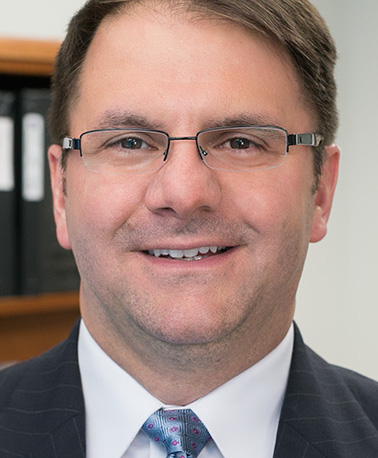
Doug Dziak currently serves as Counsel at Nixon Peabody in Washington D.C., in the Government Relations & Public Policy Practice Group. Prior to joining the team at Nixon Peabody, Doug spent 5 years working in the United States Senate in various roles, including General Counsel with the Homeland Security and Governmental Affairs Committee, and then as a Legislative Director and Chief Counsel for a United States Senator. Dziak advised the then-Chairman of the Senate Select Committee on Ethics. Earlier in his career, Doug spent almost 7 years as a competition and regulatory attorney at two international law firms.
Doug is an active member of the William & Mary Law School DC-area Alumni Association. He also provides pro bono government relations services to the Lewis b. Puller, Jr. Veterans Benefits Clinic at William & Mary, as well as being a founding member of the national Law School Veterans Clinic Coalition.
The Government Relations & Public Policy practice at Nixon Peabody provides services to Fortune 500 companies, public sector clients, government entities, non-profits, small businesses, and entrepreneurs seeking information on how legislation and regulations will impact them. The Government Relations & Regulatory practice helps public and private clients anticipate and comply with regulations that govern their industries. Lawyers at Nixon Peabody's practice also advocate for legislative and policy changes on behalf of companies.